History and geography
Choose a county on the Wagon Trail. Follow one stop to its source and ask what its date lets you say about that place.
Read a place · Inspect a manuscript or plantation mapFind a paper, read a source summary or explore the manuscript shelves.
Ask the LibraryIrish Studies at TraVision
Bring a question from your lecture hall, your reading group or your own family. Here you can read a law beside a Traveller account, follow a place through the archives, and ask what each source brings to the history of Ireland.
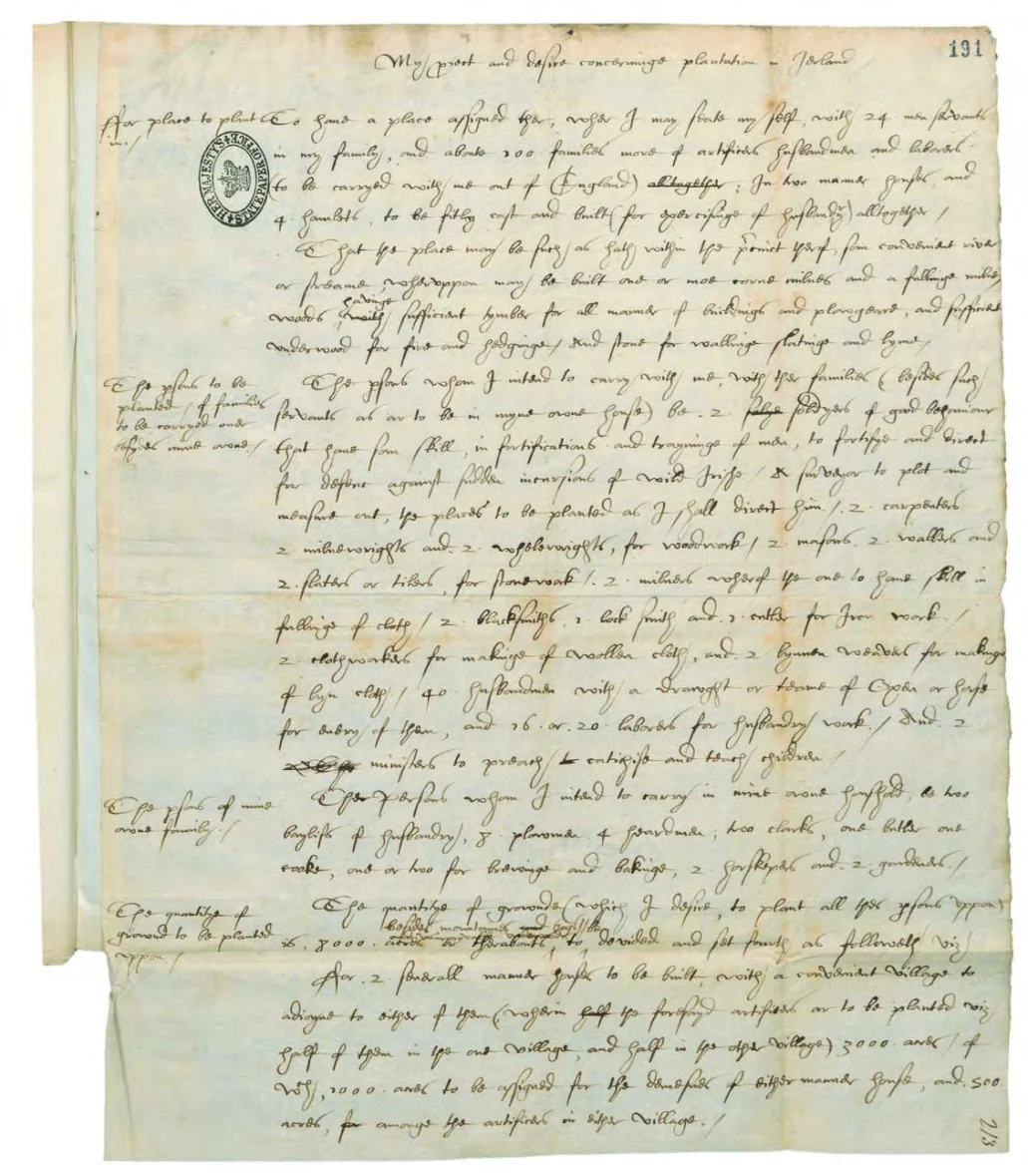
Pick a question you could answer with one document. Write down who produced it, when and for whom. Then look for a second voice that changes what you can say.
Choose a county on the Wagon Trail. Follow one stop to its source and ask what its date lets you say about that place.
Read a place · Inspect a manuscript or plantation mapWho could travel, work or stop for the night? Find the words lawmakers used, then check where the provision applied.
Read the laws on movementChoose a Traveller writer. Look for a detail of work, speech or family life that the author wanted a reader to remember.
Find a Traveller writerFor your essay, record the edition and page or section number. On reports that offer Cite this source, you can copy a reference or save it to Zotero. Browse the Library shelves.
A 50-minute seminar
Set a medieval statute beside a Traveller writer’s account. By the end of the class, students should be able to name who made each source, support one claim with a passage, and explain what the evidence leaves open.
If your students need a common passage, use the Nine Mile Road for the comparison exercise. Both sources are short enough to read or hear twice.
Ask each pair to write two sentences. Use Lewis to explain how a reader could find Rathangan. Use Collins to explain what a family did along the road. Underline the words that support each sentence and name the source beside it.
Read the marriage and fosterage clause in the Statutes of Kilkenny (clause II, page 9). Choose a passage by a Traveller writer on our Traveller writers shelf. Bring the writer’s name and the page number or passage you chose. If you cannot get a copy in time, use the attributed testimony in our paper’s family memory section.
Statute reviewed . We checked the wording about marriage and fostering against clause II in University College Cork’s CELT edition. In class, start with who issued the rule and whose relationships it sought to govern.
Look for three things in the written response: a named speaker or institution, a precise reference and care about the limits of the claim. Invite students to discuss the text. Let each person decide whether to bring their own family into the conversation.
Open the seminar reading shelfWork with TraVision on teaching and research
For colleges and research groups
Perhaps your module covers Ireland without a Traveller writer on the reading list. Perhaps you have found a term in an archive and want to think through how to use it in class. Those are good places to begin a conversation with TraVision.
Tell us who the work is for, the question you are exploring and which sources you already use. A course outline or a paragraph about your project is plenty for a first conversation.
Email the TraVision team · Contact details