 Photograph unavailable offline
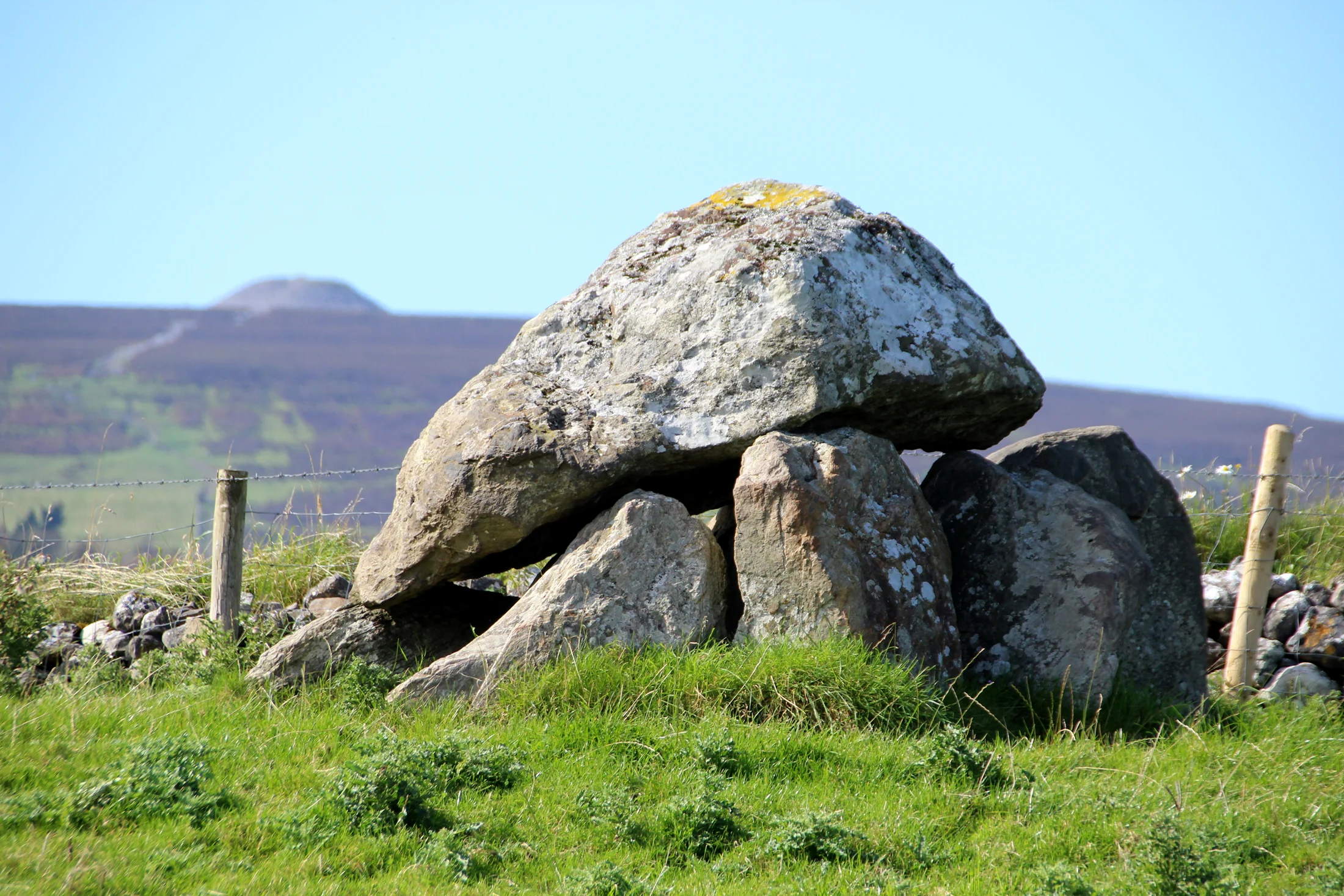
Carrowmore, County Sligo
What can we learn about life before the Famine?
In Gaelic Ireland, families moved between places for work, for cattle and to maintain ties with kin. That history gives us a starting point for asking what movement meant to people at the time. To trace the history of a particular community, we also need its own accounts and evidence that connects people across generations.
Read the population research
A 2017 study examined the population history of Irish Travellers. Its findings support Irish ancestry and a distinct population history reaching back before the Great Famine. Those findings address a question about ancestry. Questions of culture and belonging also require the knowledge of the people whose history is being told.
Read the published study (PDF)Where TraVision stands
Our position is that Irish Travellers carry continuity from Ireland’s pre-colonial Gaelic world. We are tracing those connections through community knowledge, language, archaeology, law and historical records. Some connections are better documented than others. Readers should be able to see the evidence behind each one.
What story does a child inherit?
A child who is told that their people came from failure inherits shame before they inherit history.
What would that child learn from a lesson that began with what their family knew, the work they did and the stories they kept? That is why this research matters to us, in classrooms as much as in archives.
Read the published research
Source reviewed . We checked the authors, publication date and the finding cited above against the published paper. The authors used genetic evidence to estimate a population history reaching back before the Great Famine. The University of Edinburgh holds a copy of the article.
Gilbert et al. · Scientific Reports · 2017