Why should the Irish State formally apologise to Travellers?
When we ask the State to apologise to Travellers, we want it to say what happened, who made the decisions and what it will do now. The people who called for an apology are the place to begin.
Our call for an apology
Bernard Sweeney recalls that our campaign began nearly twenty years ago. On 1 March 2017, when Taoiseach Enda Kenny recognised Traveller ethnicity in the Dáil, Bernard called down from the public gallery and asked him to apologise to Travellers on behalf of the State. The Irish Times reported his words that evening.
Read the report from the Dáil gallery, 1 March 2017 ↗Bernard remembers little public support from the NGO sector when he raised the issue. He also recalls that he and fellow campaigners set up a Facebook page called Traveller Assembly about two years before the Athlone meeting. He says their earlier work went unacknowledged.
The meeting in Athlone, October 2022
On 13 October 2022 the Irish Traveller Movement held an assembly in Athlone. Members backed a campaign for a State apology and drew attention to the 1963 Commission on Itinerancy report. The Movement described its meeting as a response to calls Travellers had already made.
Irish Traveller Movement · Account of the 2022 national assembly ↗Who got to decide?
Read the 1963 report beside the assembly’s account. In the first document, the State set out what it thought should happen to Traveller families. In the second, Travellers explain what those policies meant for our people. Before a politician drafts an apology, we would ask them to read both.
Commission on Itinerancy · Original report, part one (PDF) ↗What should happen afterwards?
In February 2026 Bernard Joyce, director of the Irish Traveller Movement, brought the call for an apology to an Oireachtas committee. He asked for truth, recognition and change. We would put a practical question to the minister responsible. What will you do, and when can families come back to check?
Bernard Joyce · Opening statement, 12 February 2026 (PDF) ↗Essential reading for the campaign
For elected representatives. Read the 1963 report and Bernard Joyce’s statement linked above. Which decisions can your office help put right?
For human rights advocates and campaigners. Read the account from the Dáil gallery alongside the Movement’s account of the Athlone meeting. Ask the people who made those calls what they want you to raise today.
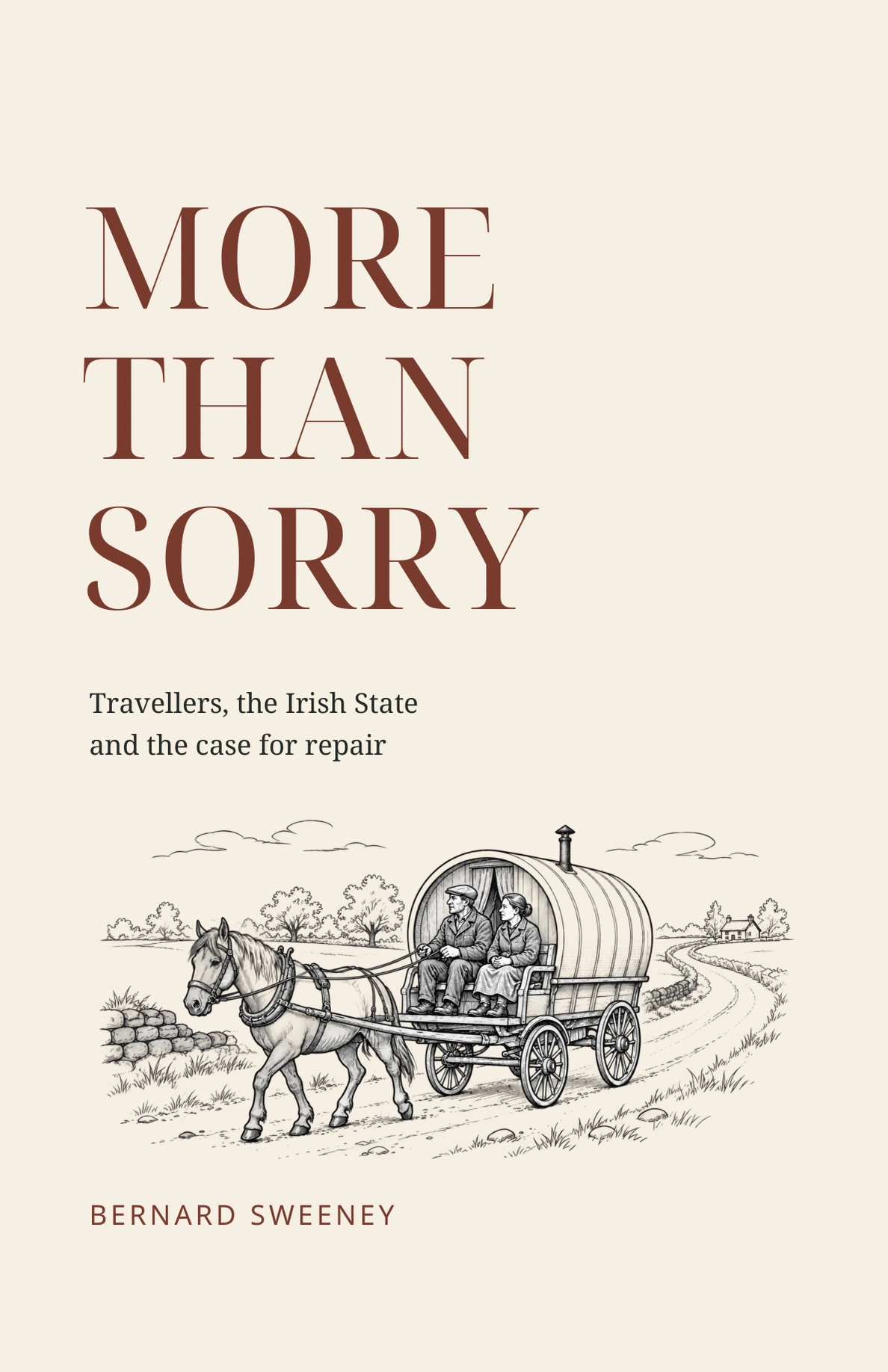
More Than Sorry
Continue the discussion with our book. The Foundation can advise on copies for a constituency office, campaign or reading group.
Book details and enquiries ↗